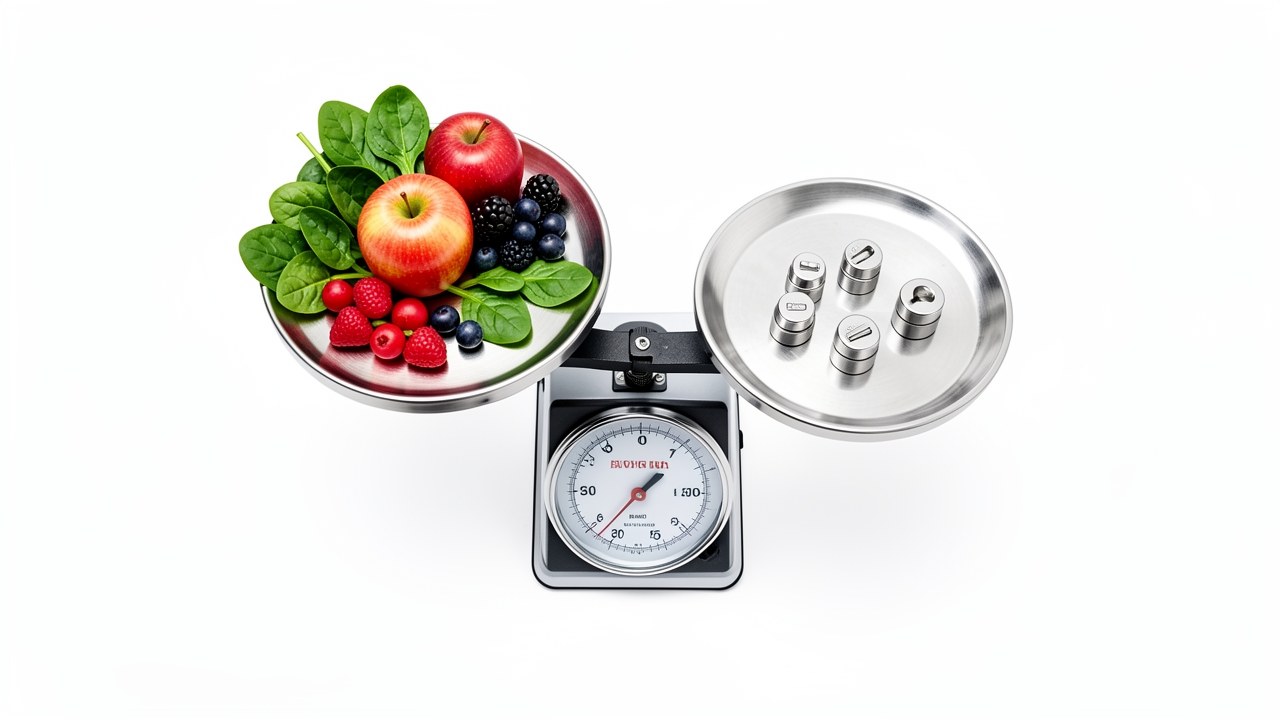
Understanding Energy Balance
At the heart of weight management lies the concept of energy balance: the relationship between the calories you consume through food and beverages and the calories your body expends through basic functions, physical activity, and digestion. When your energy intake matches your energy output, your body weight tends to remain stable. If you take in more calories than you use, you gain weight; if you take in fewer, you lose weight.
This principle is supported by public health education, including open textbook resources that describe energy balance as a foundational concept for weight management. The key takeaway is that weight change is not driven by any single food or activity but by the cumulative balance of energy over time.
Sources: InBody USA, Rebus Press
Metabolism: BMR and TDEE
Your metabolism is often described in terms of two key numbers: basal metabolic rate (BMR) and total daily energy expenditure (TDEE). BMR represents the calories your body burns at rest just to maintain vital functions such as breathing, circulation, and cell production. TDEE is the total number of calories you burn in a day, including BMR plus energy used for physical activity and the digestion of food (the thermic effect of food).
To estimate your daily calorie needs, you first calculate your BMR using formulas that incorporate factors like age, sex, height, and weight. One equation mentioned in educational sources is the Cunningham equation, which uses lean body mass: BMR = 500 + 22 × lean body mass (kg). However, while such formulas can give a rough starting point, individual variation means they are not perfectly accurate for everyone.
Once you know your BMR, you can estimate your TDEE by multiplying by an activity factor. Consuming fewer calories than your TDEE typically leads to weight loss; consuming more leads to weight gain. Maintaining weight requires calorie intake roughly equal to TDEE.
Sources: InBody USA, Gear Up to Fit, Medicine LibreTexts
Body Composition: Muscle vs. Fat
Body composition refers to the relative proportions of fat mass and fat-free mass—which includes muscle, bone, organs, and water—in your body. It is more informative than body weight alone, because two people of the same weight can have very different health and fitness profiles depending on their ratio of muscle to fat.
Fat mass itself has subtypes: essential fat, which is necessary for hormone production, temperature regulation, and vitamin absorption, and storage fat, which accumulates under the skin (subcutaneous fat) and around internal organs (visceral fat). Excess visceral fat is associated with higher health risks.
Common methods for estimating body fat percentage include skinfold calipers, bioelectrical impedance analysis (BIA), and hydrostatic weighing. Each method has its own accuracy and availability. In contrast, body mass index (BMI) is a screening tool that uses only height and weight. It does not distinguish between muscle and fat, so a very muscular athlete may have a high BMI without excess fat. For that reason, waist circumference is sometimes used in addition: a waist measurement above 35 inches for women and above 40 inches for men signals increased risk related to abdominal fat.
Sources: Rebus Press, AJ Design
Factors Affecting Weight
Several factors interact to determine your weight, including genetics, hormones, age, and lifestyle. Genetic factors can increase susceptibility to obesity, but environment and lifestyle choices play a large role. Hormones such as ghrelin and leptin help regulate hunger and energy balance, influencing how much you eat and how your body stores fat.
Metabolism also changes with age. Older adults often lose muscle mass, which in turn lowers BMR and can make weight management more challenging. Conversely, regular exercise—especially strength training—can help build muscle, thereby increasing BMR and easing weight control. The majority of daily energy expenditure (50-70%) comes from basal metabolism, so maintaining a healthy level of lean mass supports a higher resting calorie burn.
Sources: Rebus Press, Medicine LibreTexts, InBody USA, Gear Up to Fit
Weight Set Point Theory
Set point theory proposes that the body has a natural regulatory system that defends a certain weight or weight range. According to this theory, when you lose weight, your body may respond with hormonal and metabolic changes that promote weight regain, bringing you back to your set point. Conversely, when you gain weight, your body may increase energy expenditure to resist further gains.
While set point theory is a proposed concept in weight-regulation research, the scientific consensus on its exact mechanisms and the extent to which the set point can be permanently shifted is still evolving. Some sources suggest that gradual, lasting lifestyle changes—and maintaining weight loss for at least a year—may help shift your set point to a lower range, but this is not firmly supported by the strongest evidence. It remains a useful framework for understanding why short-term diets often fail and why long-term habits are important.
Sources: HealthSpectra
Healthy Weight Loss Rate
Health experts also emphasize that losing just 5-10% of your body weight can lead to meaningful health improvements. A person weighing 200 pounds, for example, may see benefits with a loss of 10 to 20 pounds. The goal is not just to reach a number on the scale but to build habits you can maintain.
- A calorie deficit of about 500 calories per day can lead to approximately one pound of weight loss per week.
- Even a 5-10% reduction in body weight can produce health improvements.
Sources: AJ Design, Rebus Press
Evidence-Based Principles
Drawing from the science of energy balance, metabolism, and body composition, several principles emerge as evidence-based foundations for healthy weight management. These principles focus on sustainable practices rather than quick fixes.
First, creating a modest calorie deficit—rather than drastic restriction—is more likely to support lasting weight loss. Second, preserving or building muscle through strength training can help maintain a healthy metabolism. Third, paying attention to body composition and waist circumference, not just BMI, gives a clearer picture of health. Finally, understanding that your body's set point may resist rapid changes helps set realistic expectations and encourages patience.
- Prioritize a moderate calorie deficit for sustainable loss.
- Include regular strength training to support muscle mass.
- Monitor body composition and waist circumference for a fuller health picture.
- Expect gradual progress; rapid loss is often not maintainable.
Sources: InBody USA, Rebus Press
Frequently asked questions
How many calories do I need?
Your daily calorie needs depend on your age, sex, height, weight, and activity level. You can estimate your total daily energy expenditure (TDEE) by first calculating your basal metabolic rate (BMR)—the calories you burn at rest—using a formula such as the Cunningham equation: BMR = 500 + 22 × lean body mass (kg). Then adjust for physical activity by multiplying your BMR by an activity factor. This gives an estimate of how many calories you need to maintain your current weight. To lose weight, you would consume fewer calories than this; to gain weight, more.
Sources: InBody USA, Gear Up to FitCan metabolism slow with age?
Yes, metabolism can slow with age, largely due to a loss of muscle mass. Because muscle tissue burns more calories at rest than fat tissue, a decrease in muscle mass leads to a lower basal metabolic rate (BMR). This means that, all else being equal, you burn fewer calories as you get older. Regular exercise, especially strength training, can help you build and maintain muscle, thereby offsetting some of this decline and supporting a healthier metabolism.
Sources: InBody USA, Medicine LibreTextsHow to measure body fat?
There are several common methods to estimate body fat percentage. Skinfold calipers involve measuring the thickness of skinfolds at specific body sites. Bioelectrical impedance analysis (BIA) sends a low-level electrical current through the body; it is often found in home scales and handheld devices. Hydrostatic weighing (underwater weighing) is a more traditional laboratory method. Each technique has its own pros and cons in terms of accuracy, cost, and convenience. Keep in mind that results can vary between providers, and for a general health assessment, waist circumference is a simple, useful indicator of abdominal fat.
Sources: Rebus PressDo genetics determine weight?
Genetics do play a role in your susceptibility to weight gain, but they do not determine your weight by themselves. Environmental and lifestyle factors—such as diet, physical activity, and other habits—are also major contributors. While you may face a genetic tendency toward a certain body type or weight range, your choices can influence your weight within that range. This is why sustainable changes in eating and activity patterns are the cornerstone of weight management, regardless of your genetic background.
Sources: Rebus PressSources
- How to Use BMR to Lose Weight | InBody USA — InBody USA
- BMI & BMR Calculator — Body Fat, TDEE, Weight Loss — AJ Design
- Does Your Body Have a Set Weight? Understanding Set Point Theory in Weight Loss — HealthSpectra
- Energy Balance and Weight Management – Lifelong Fitness And Wellness — Rebus Press
- 8.3: Weight Management - Medicine LibreTexts — Medicine LibreTexts
- Increase TDEE & BMR for Faster Weight Loss: Proven Tips — Gear Up to Fit